


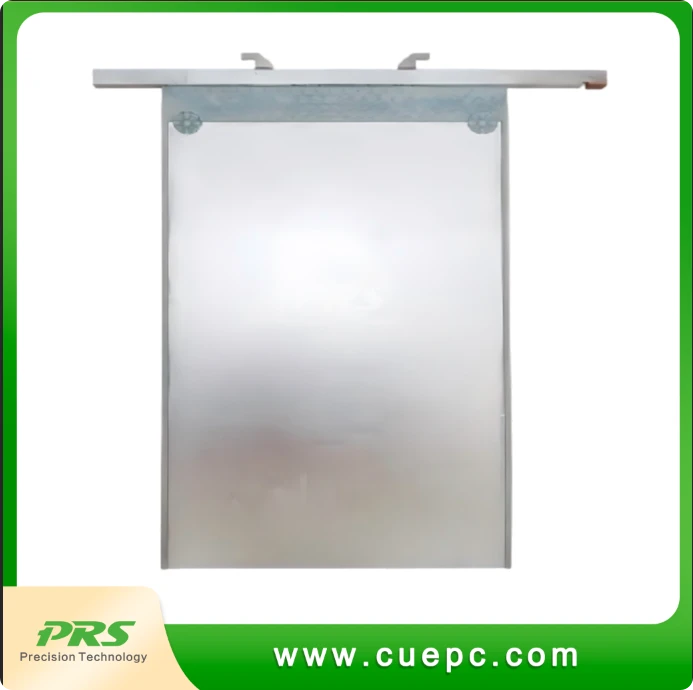


Aluminum Cathode Plates For Zinc Electrowinning

Durable Heavy-Duty Aluminum Cathodes
| Item | Specification |
|---|---|
| Cathode Blade Material | 1070H18 aluminum alloy (Al ≥ 99.7%, hardness: 32–35 HBS) |
| Conductive Beam Material | 6101 aluminum alloy for the beam and lifting lugs; ASTM C11000 copper for conductive contact blocks |
| Effective Plate Area | 2 – 3.6 ㎡ (customizable) |
| Main Application | Zinc electrowinning |
| Typical Service Life | 18 months for sulfuric acid process; 6–8 months for ammonia leaching process |
Key Structural Features
- The hanger beam is machined from one full aluminum bar, no splicing.
- Copper conductive blocks are fixed to the hanger beam either by friction stir welding or bolt fastening.
- All parts above the electrolyte level (except copper contact blocks) are covered with anti-corrosion coating. Two options are available: solvent-free epoxy resin coating, or patented vulcanized rubber.
- The aluminum blade has a standard 2B smooth surface finish.
- The blade and conductive beam are joined by friction stir welding for medium and small sizes.
Manufacturing & Design Details
1. High-Purity Aluminum Raw Materials
We use high-purity corrosion-resistant aluminum alloys supplied by reputable mills such as CHINALCO for both the cathode blade and conductive beam. The material balances good electrical conductivity, light weight and structural strength, suitable for long-term immersion in zinc electrolyte.


2. Matched Welding Solutions for Different Sizes
The joint between the conductive beam and blade directly affects the cathode's service life. We use different welding methods according to plate size to ensure the best joint quality:
- For small and medium-sized plates: Automated friction stir welding (FSW). This is a solid-state joining process that creates a stronger, more uniform joint than traditional fusion welding. It causes almost no thermal deformation and no internal porosity, so the joint stays intact through repeated lifting and stripping cycles.
- For large 3.6 ㎡ plates: Specialized manual acetylene welding. It achieves deep, firm penetration to withstand the higher mechanical stress of large-size plates during automated handling and operation.


3. Full Anti-Corrosion Protection Above Liquid Level
Acid mist is one of the main causes of aluminum cathode corrosion and aging. We apply a dedicated protective coating to all areas above the electrolyte surface and edge strip zones, forming a reliable barrier against acid mist erosion and effectively extending the cathode's service life.
- Solvent-free epoxy resin coatings
- Patented vulcanized rubber

4. Integrally Injection-Molded PP Edge Strips
The edge strips are not simply glued on. We inject high-grade PP plastic directly onto the aluminum blade with custom molds to form a tight, permanent seal. Compared with pasted edge strips, this integrally molded design stands up much better to physical impact and chemical corrosion, and lasts far longer for both the strip and the blade edge.
5. Bottom V-Groove for Clean, Easy Stripping
The bottom edge of the aluminum blade is precision-milled with a continuous V-shaped groove. It creates a natural breaking point for the deposited zinc sheet, so the zinc layer splits cleanly and consistently during automatic stripping. This design speeds up the stripping process and reduces damage to the blade surface.
Technical Specifications
| Item | Parameter |
|---|---|
| Blade & Beam Material | High-purity aluminum alloy |
| Standard Plate Area | 2 – 3.6 ㎡ (customizable) |
| Edge Strip Material | Injection-molded PP plastic |
| Welding Method | Automated friction stir welding (small/medium plates) / manual acetylene welding (large plates) |
| Special Features | Anti-corrosion coating above liquid level and edge zones; bottom V-groove for stripping |
| Surface Finish | 2B grade |
Key Benefits for Your Zinc Plant
- Proven large-size supply capacity
We have mature mass production experience for 3.6 ㎡ large-format aluminum cathodes, and can support stable supply for greenfield projects and large-scale plant expansion. - Reliable weld joint durability
Friction stir welding for smaller plates delivers higher joint strength than conventional methods, and our specialized manual welding process ensures robust performance for the largest plates. Both solutions reduce the risk of joint failure and unplanned downtime. - Longer service life, lower total cost
The combination of anti-corrosion coating above the liquid level and integrally molded edge strips provides multi-layer protection against common failure causes. It extends replacement cycles and lowers your long-term procurement and maintenance costs. - Higher stripping efficiency, less blade damage
The precision V-groove at the blade bottom ensures clean separation of zinc sheets. It shortens stripping time, reduces blade surface damage and keeps the cathode in good condition for longer.
Photos of Massive Produced Aluminum Cathode Plates and Project Site


Frequently Asked Questions (FAQ)
Q1: Why adopt integrally molded PP edge strips instead of glued strips?
A: Our PP edge strips are one-piece injection molded directly on the aluminum blade, not simply bonded. This seamless integrated structure resists chemical corrosion and mechanical impact much better, avoiding peeling and leakage issues, and greatly extending the service life of edge protection.
Q2: What is the function of the bottom V-groove design?
A: The precision-machined V-groove at the blade bottom forms a natural breaking point. It enables clean, smooth separation of zinc sheets during automatic stripping, improves stripping efficiency, and effectively avoids surface damage to the aluminum cathode.
Q3: Are the cathode sizes customizable?
A: Yes. Our standard effective plate area ranges from 2 ㎡ to 3.6 ㎡. We can customize non-standard dimensions and structural details according to your electrolytic cell size and production requirements.
Q4: What material standards are used for your aluminum cathodes?
A: The cathode blade adopts 1070H18 high-purity aluminum alloy (Al ≥ 99.7%). The conductive beam and lifting lugs use 6101 aluminum alloy, and the conductive block adopts standard ASTM C11000 copper, balancing stable conductivity and structural durability.
Q5: Can the copper conductive block be replaced?
A: Yes. The copper conductive block is fixed by either friction stir welding or bolt connection. The bolted structure supports convenient disassembly, replacement and daily maintenance, reducing your later operating cost.
Hot Tags: aluminum cathode plates for zinc electrowinning, China aluminum cathode plates for zinc electrowinning suppliers, 316L Stainless Steel Cathode, Cathode Blank, LDX 2101 Stainless Steel Cathode, Permanent Cathode, SS 316L Cathode, Stainless Steel Cathode
You Might Also Like


Send Inquiry