


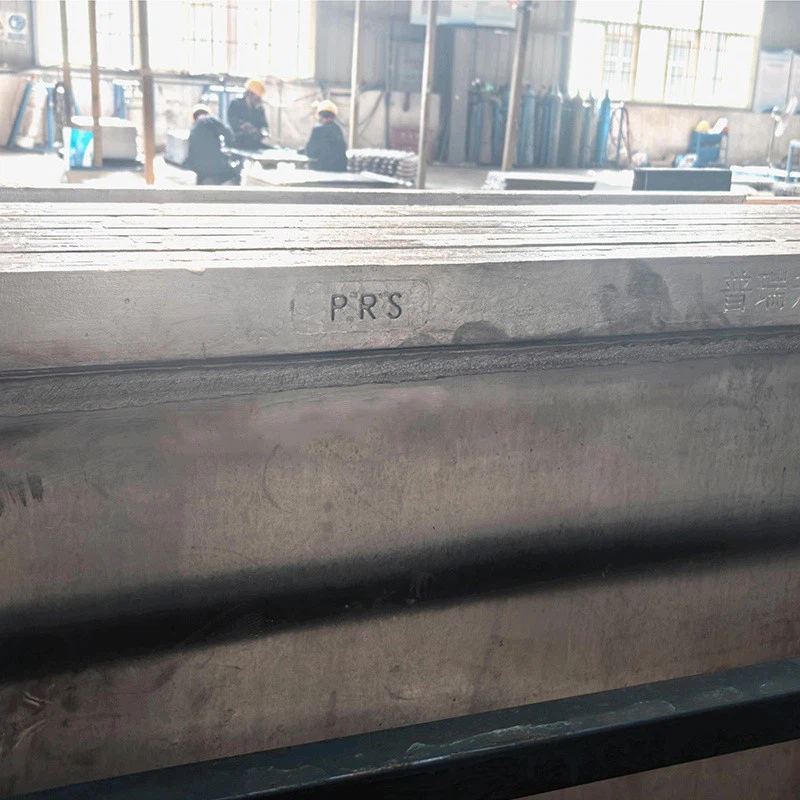


Stainless Steel Cathode

Entry-Level Stainless Steel Permanent Cathode for Cost-Sensitive Projects
The standard stainless steel cathode is the most economical permanent cathode option for copper electrowinning and electrorefining. Made from general-purpose austenitic stainless steel (typically 304 grade), it provides reliable performance in clean, low-chloride sulfuric acid electrolyte environments.
This entry-level cathode is designed for projects where initial budget is a primary consideration, and operating conditions are relatively mild. It offers a practical way to adopt permanent cathode technology without the higher cost of premium grades like 316L or duplex steel.
Common Material Grades
Stainless steel cathodes are available in different grades to suit varying requirements:
| Grade | Typical Service Life | Relative Cost | Main Features |
|---|---|---|---|
| 304 Stainless Steel | 3 – 5 years | Low | Basic corrosion resistance, most economical |
| 316L Stainless Steel | 5 – 7 years | Medium | Molybdenum added, better pitting resistance |
| Duplex Steel (2205/LDX 2101) | 7 – 12 years | Higher | Higher strength and corrosion resistance |
Practical Considerations
- Lower Upfront Cost Standard stainless steel is the lowest cost permanent cathode material, making it accessible for small operations and projects with limited capital budget.
- Shorter Service Life Without the molybdenum addition found in 316L, standard stainless steel has lower pitting corrosion resistance. Service life is shorter, especially if chloride levels are not well controlled.
- Easy to Source and Process Standard stainless steel is a common industrial material with wide availability. Processing is straightforward, leading to shorter lead times and easier on-site repair.
- Upgrade Path Available If your operation expands or conditions change, you can gradually upgrade to higher-grade cathodes over time. All grades can be designed to the same dimensions for interchangeability.
Typical Applications
- Small copper electrowinning operations
- Pilot plants and test lines
- Short-term or temporary production projects
- Budget-focused capacity expansion
- Replacement for existing standard stainless steel cathode fleets
- Electrorefining plants with clean feedstock
Free Drawings:
We provide AutoCAD drawings free of charge. Adjustments can be made according to your needs, and our engineering team will offer suggestions based on experience. Final drawings are confirmed before business negotiation.
Lead Time:
Our production cycle is efficient - 5,000 stainless steel cathodes can be delivered in just 70–75 days depending on customization level.
Payment Terms:
50% T/T in advance, with the balance paid before shipment. Bank guarantees are also acceptable.
After-sales Service:
We respond within 24 hours. Remote guidance and on-site support for installation or stripping line integration are available upon request.

Packaging & Shipping
Export Handling
We are experienced in international logistics and can quickly obtain Certificates of Origin and other export documentation.
Packaging
Cathodes are packed with reinforced steel frame structures and protective foam layers to prevent scratching, bending, or edge damage during transit.
Shipping Mode
Containerized shipment. If cathodes are purchased together with electrowinning cells, we can co-load them to save container space and reduce freight costs. Both sea and land transport arrangements are available depending on the project location.
FAQ
Hot Tags: stainless steel cathode, China stainless steel cathode suppliers, Cathode Blank, Stainless Steel Cathode, 316L Stainless Steel Cathode, LDX 2101 Stainless Steel Cathode, SS 316L Cathode, cathode plate
Previous
Cathode BlankNext
SS 316L CathodeYou Might Also Like


Send Inquiry