

What are the mechanical properties of copper busbar?
As a trusted copper busbar supplier, I am often asked about the mechanical properties of copper busbars. Understanding these properties is crucial for anyone involved in electrical engineering, construction, or any field where copper busbars are used. In this blog post, I will delve into the key mechanical properties of copper busbars, their significance, and how they impact the performance and application of these essential electrical components.
1. Tensile Strength
Tensile strength is one of the most important mechanical properties of copper busbars. It refers to the maximum amount of tensile stress that a material can withstand before it breaks or fails. For copper busbars, high tensile strength is desirable as it ensures that the busbars can withstand the mechanical forces they may encounter during installation, operation, and maintenance.
Copper is known for its relatively high tensile strength. Pure copper typically has a tensile strength ranging from 200 to 250 MPa (megapascals). However, the tensile strength of copper busbars can be further enhanced through various processes such as cold working and alloying. Cold working, which involves deforming the copper at room temperature, can increase the tensile strength by up to 50%. Alloying copper with other elements such as silver, tin, or nickel can also improve its tensile strength and other mechanical properties.
The high tensile strength of copper busbars makes them suitable for applications where they need to support heavy loads or withstand mechanical vibrations. For example, in power distribution systems, copper busbars are used to carry large amounts of electrical current. The high tensile strength ensures that the busbars can support their own weight and the weight of any attached components without breaking or deforming.
2. Yield Strength
Yield strength is another important mechanical property of copper busbars. It is the stress at which a material begins to deform plastically, meaning that it will not return to its original shape after the stress is removed. Yield strength is an important consideration in the design and installation of copper busbars as it determines the maximum load that the busbars can safely carry without permanent deformation.
The yield strength of copper busbars is typically lower than their tensile strength. For pure copper, the yield strength is usually around 70 to 100 MPa. However, like tensile strength, the yield strength of copper busbars can be increased through cold working and alloying. Cold working can increase the yield strength by up to 100%, while alloying can also have a significant impact on the yield strength.
In practical applications, the yield strength of copper busbars is used to determine the maximum allowable stress in the design of electrical systems. By ensuring that the stress on the busbars remains below the yield strength, engineers can prevent permanent deformation and ensure the long-term reliability of the electrical system.
3. Ductility
Ductility is the ability of a material to deform plastically under tensile stress without breaking. It is an important property for copper busbars as it allows them to be easily formed into various shapes and sizes during the manufacturing process. Copper is known for its excellent ductility, which makes it one of the most widely used materials for electrical applications.
The ductility of copper busbars is typically measured by the percentage of elongation at break. Elongation at break is the percentage increase in the length of a specimen after it has been pulled to failure. For pure copper, the elongation at break is usually around 40 to 50%. This high ductility allows copper busbars to be bent, twisted, and formed into complex shapes without cracking or breaking.
The ductility of copper busbars also makes them suitable for applications where they need to be installed in tight spaces or around obstacles. For example, in electrical panels, copper busbars can be bent and shaped to fit the available space and connect different electrical components. The ability to deform plastically without breaking ensures that the busbars can be installed easily and safely.
4. Hardness
Hardness is a measure of a material's resistance to indentation, scratching, or abrasion. It is an important property for copper busbars as it affects their wear resistance and durability. Copper is a relatively soft metal, with a hardness of around 30 to 40 on the Rockwell B scale. However, the hardness of copper busbars can be increased through various processes such as cold working and heat treatment.
Cold working can increase the hardness of copper busbars by up to 50%. This is because the deformation process during cold working creates dislocations in the crystal structure of the copper, which makes it more difficult for the material to deform. Heat treatment, such as annealing or quenching, can also be used to increase the hardness of copper busbars. Annealing involves heating the copper to a high temperature and then slowly cooling it, which can improve the hardness and other mechanical properties. Quenching involves heating the copper to a high temperature and then rapidly cooling it, which can increase the hardness significantly.
The hardness of copper busbars is important in applications where they are exposed to wear and tear. For example, in electrical contacts, the hardness of the copper busbars can affect their resistance to arcing and erosion. A harder copper busbar will be more resistant to wear and tear, which can improve the reliability and longevity of the electrical contact.
5. Fatigue Resistance
Fatigue resistance is the ability of a material to withstand repeated loading and unloading without failing. It is an important property for copper busbars as they are often subjected to cyclic loading in electrical systems. Cyclic loading can occur due to changes in electrical current, mechanical vibrations, or thermal expansion and contraction.
Copper has good fatigue resistance, which makes it suitable for applications where it is subjected to cyclic loading. However, the fatigue resistance of copper busbars can be affected by various factors such as the type of loading, the frequency of loading, and the presence of defects or impurities. For example, if the copper busbars are subjected to high-frequency cyclic loading, they may be more prone to fatigue failure.

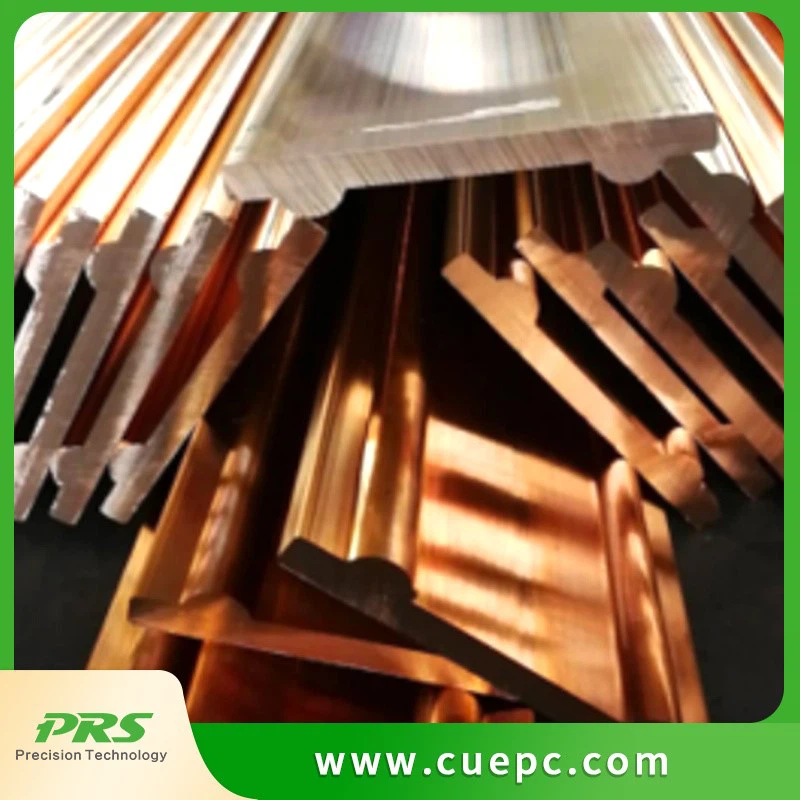
To improve the fatigue resistance of copper busbars, various measures can be taken. For example, the design of the electrical system can be optimized to reduce the cyclic loading on the busbars. The surface finish of the busbars can also be improved to reduce the stress concentration and prevent the initiation of cracks. Additionally, the use of high-quality copper and proper manufacturing processes can help to minimize the presence of defects and impurities, which can improve the fatigue resistance of the busbars.
Impact on Applications
The mechanical properties of copper busbars have a significant impact on their applications. For example, the high tensile strength and yield strength of copper busbars make them suitable for use in high-power electrical systems where they need to carry large amounts of current and support heavy loads. The excellent ductility of copper busbars allows them to be easily formed into various shapes and sizes, which makes them ideal for use in electrical panels and other applications where space is limited. The hardness and fatigue resistance of copper busbars ensure their durability and reliability in long-term use.
In addition to the mechanical properties, the electrical conductivity of copper is also an important factor in its applications. Copper has one of the highest electrical conductivities of all metals, which makes it an ideal material for electrical applications. The combination of high electrical conductivity and good mechanical properties makes copper busbars the preferred choice for many electrical engineers and designers.
Different Types of Copper Busbars and Their Mechanical Properties
There are different types of copper busbars available in the market, each with its own unique mechanical properties. For example, Tinned Copper Busbar is coated with a thin layer of tin, which can improve its corrosion resistance and solderability. The tin coating can also have a slight impact on the mechanical properties of the copper busbar, such as increasing its hardness and reducing its ductility.
Solid Copper Busbar is made of a single piece of copper, which provides excellent mechanical strength and electrical conductivity. Solid copper busbars are often used in high-power electrical systems where reliability and durability are crucial.
DC Copper Busbar Installation requires careful consideration of the mechanical properties of the busbars. The installation process can involve bending, cutting, and joining the busbars, which requires them to have good ductility and strength. Additionally, the busbars need to be able to withstand the mechanical forces during installation and operation, such as vibrations and thermal expansion.
Conclusion
In conclusion, the mechanical properties of copper busbars, including tensile strength, yield strength, ductility, hardness, and fatigue resistance, play a crucial role in their performance and application. As a copper busbar supplier, we understand the importance of these properties and ensure that our products meet the highest standards of quality and reliability.
If you are in need of high-quality copper busbars for your electrical projects, we invite you to contact us for further discussion. Our team of experts can provide you with detailed information about our products and help you choose the right copper busbars for your specific requirements. Whether you need tinned copper busbars, solid copper busbars, or assistance with DC copper busbar installation, we are here to support you. Let's work together to ensure the success of your electrical projects.
References
- ASM Handbook Volume 2: Properties and Selection: Nonferrous Alloys and Special-Purpose Materials. ASM International.
- Copper Development Association Inc. "Copper: Its Properties, Processing, and Applications."
- Electrical Power Systems, Second Edition. By Turan Gonen. McGraw-Hill Education.


